Free Blood Pressure Tracker Online
Log Your BP Readings and Spot Trends with Charts
Keeping an eye on your blood pressure between check-ups is one of the simplest things you can do for your long-term heart health. Research consistently shows that people who track their readings regularly catch changes earlier and have better conversations with their doctor about what’s really going on.
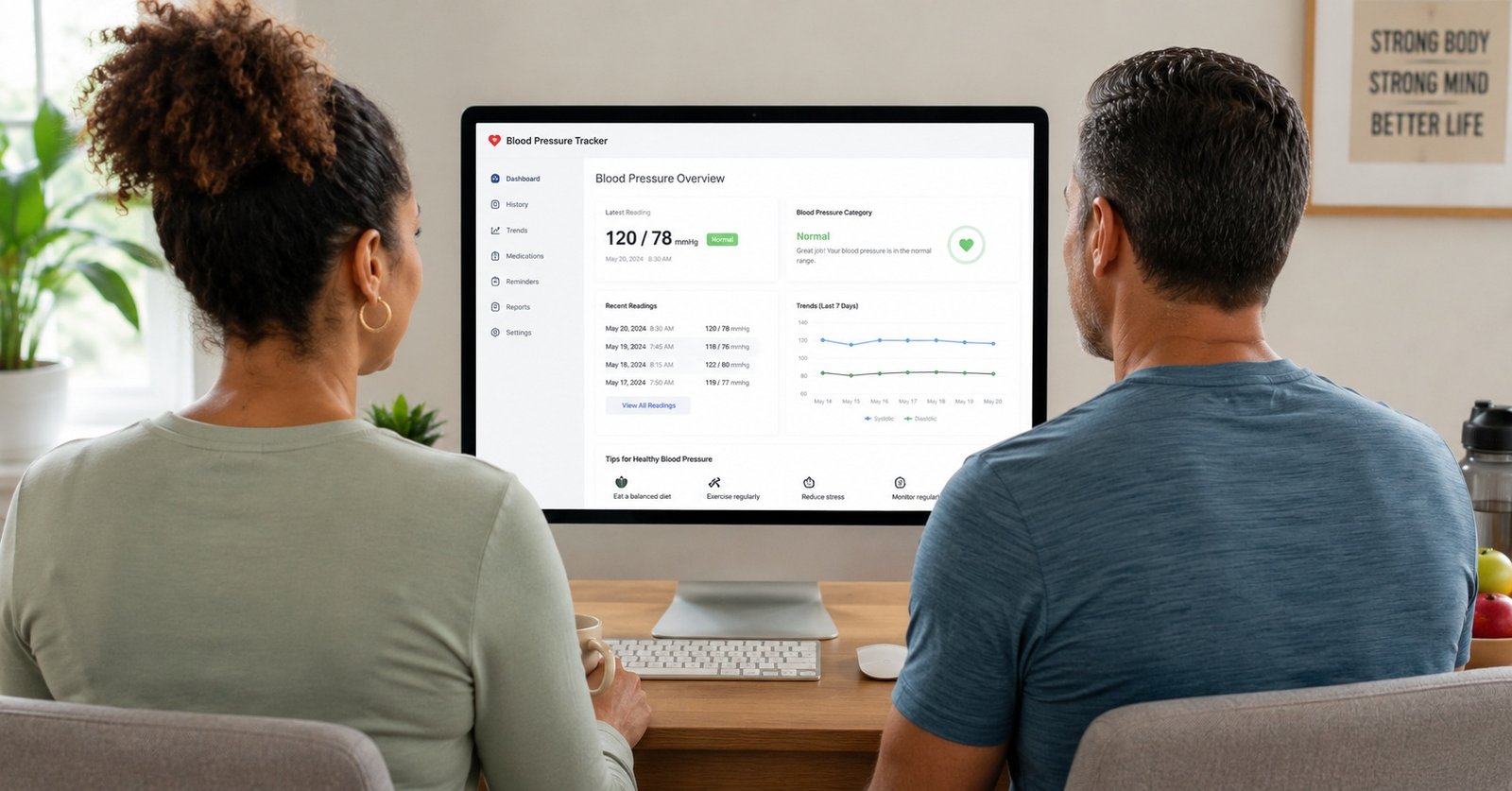
At Prescribe MyFitness, our free blood pressure tracker online lets you log your systolic and diastolic readings, your pulse, and see exactly how your numbers are trending over time, completely free, no subscription needed.
How to Use the Free Blood Pressure Tracker Online
Getting started takes less than two minutes:
- Enter your systolic (top number) and diastolic (bottom number) reading
- Add your pulse if your monitor provides one
- Log the time of day and any notes (e.g. after exercise, before medication)
- Repeat each time you take a reading
- Watch your trend chart update in real time
The tracker will automatically flag readings that fall outside the normal range and show you how your average is shifting over days, weeks, and months.
What Do Your Blood Pressure Numbers Mean?
Blood pressure is recorded as two numbers: systolic over diastolic, measured in mmHg.
- Systolic (top number): the pressure in your arteries when your heart beats
- Diastolic (bottom number): the pressure in your arteries when your heart rests between beats
According to NHS guidance, blood pressure readings generally fall into these ranges:
- Low: 90/60 mmHg or lower
- Ideal: between 90/60 mmHg and 120/80 mmHg
- Pre-high (elevated): between 120/80 mmHg and 140/90 mmHg
- High: 140/90 mmHg or higher, confirmed over several readings
A single high reading isn't a diagnosis, blood pressure naturally varies through the day. This is why our tracker focuses on your trend line rather than any one reading in isolation.
Understanding Hypertension Risk
Consistently high blood pressure (hypertension) makes your heart work harder and can increase the risk of heart attack, stroke, and kidney problems over time. It often has no obvious symptoms, which is why regular home monitoring is so valuable alongside check-ups with your GP.
Factors that can raise blood pressure include:
- Excess salt in the diet
- Being overweight or inactive
- Drinking too much alcohol or caffeine
- Stress and poor sleep
- Smoking
- Some medications and underlying health conditions
Small, sustained lifestyle changes, more movement, less salt, better sleep, can make a measurable difference to your numbers over weeks and months.
Why Your Blood Pressure Fluctuates Daily
It's completely normal for your blood pressure to rise and fall several times a day, even in healthy people. This is due to:
- Time of day (readings are often lowest at night, higher in the morning)
- Physical activity or exercise in the hour beforehand
- Caffeine, alcohol, or a heavy meal
- Stress, anxiety, or even the anxiety of being tested ("white coat syndrome")
- Talking or moving during the measurement
This is why our tracker uses a trend line rather than focusing on individual readings. For the most consistent results, sit quietly for five minutes beforehand, keep your arm supported at heart height, and take your reading at the same time each day.
Tips to Stay on Track
- Log every reading, even the high ones, data is more useful than gaps
- Take two readings a minute apart and log the average, if your monitor allows
- Focus on the trend line, not individual readings
- Pair blood pressure logging with our Free Health Habit Tracker to track sleep, water, and exercise
- Use our Free Meal Plan Generator to help manage sodium intake with balanced meals
- If your readings are consistently high, speak with your GP rather than relying on tracking alone
Frequently Asked Questions
What is a normal blood pressure reading?
A reading around 120/80 mmHg or below is generally considered ideal for most adults. Anything consistently at or above 140/90 mmHg is considered high and worth discussing with your GP.
How often should I check my blood pressure?
If you're monitoring at home, once or twice a day at consistent times (e.g. morning and evening) gives a reliable picture. If you've been advised to monitor closely by a doctor, follow their specific guidance.
Should I worry about one high reading?
Not necessarily. Blood pressure varies naturally and can spike from stress, caffeine, or activity. What matters more is the pattern over several readings. If a reading is very high (180/120 mmHg or above) or you feel unwell, seek medical advice promptly.
| 💡 Use our Free Health Habit Tracker to build routines that support healthy blood pressure, or ask our Free AI Fitness Coach for personalised lifestyle tips, both free at Prescribe MyFitness. |